
I’ve just crossed back into the USA, ending almost three months in the Canadian Maritimes. While I enjoyed exploring the potato fudge and seaweed pie on Prince Edward Island (PEI), I was most interested in exploring Canada’s easternmost province — Newfoundland (NL). Sadly, I had a hit & miss experience hunting down local dishes, but a lot of that has to do with modern economics.
Many dishes simply aren’t easy to make on a commercial scale, and others just aren’t in fashion. Cod tongues for example, are actually meat from the cheek/jaw of the fish. You’d fillet your catch and sell it, then eat the leftovers. That generally means if you want cod tongues you cut them yourself, as the extra labor of cutting them is exactly why they aren’t sold commercially to begin with.
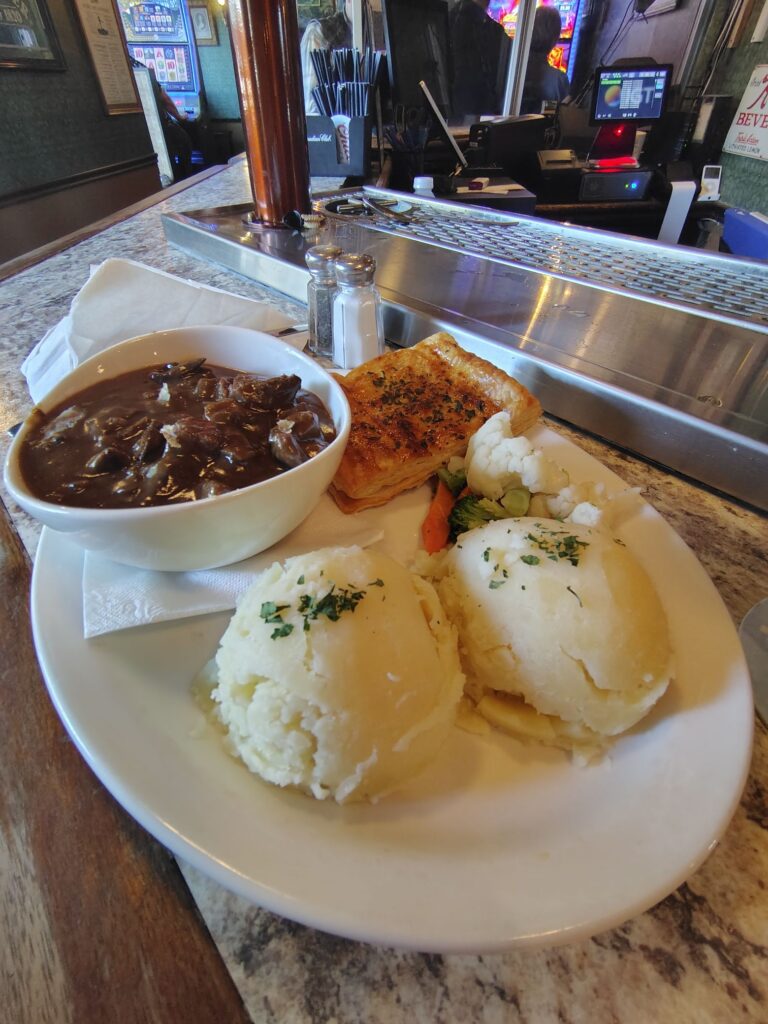
That’s also true to a degree with Jigg’s Dinner. Still a popular Sunday meal, many restaurants will serve it, but the pot goes empty pretty early in the afternoon. As for falling out of favor, there were several dishes I came across. For example, I didn’t run into a Newfie native who actually liked seal meat, or Turre (also spelled turr), which is the Newfie word for the murre, a type of seabird that is still hunted. In fact, NL is the only place in North America where non-indigenous people are legally allowed to hunt migratory seabirds. I’m told the meat isn’t particularly favored because it tastes fishy and gamey, and is greasy like a dark black duck or goose.
But instead of telling you what I didn’t discover first-hand, let me set the stage. First, to pick up from my last post, I should mention Nova Scotia briefly.
The Fundy coast and Wharf Rat Rally
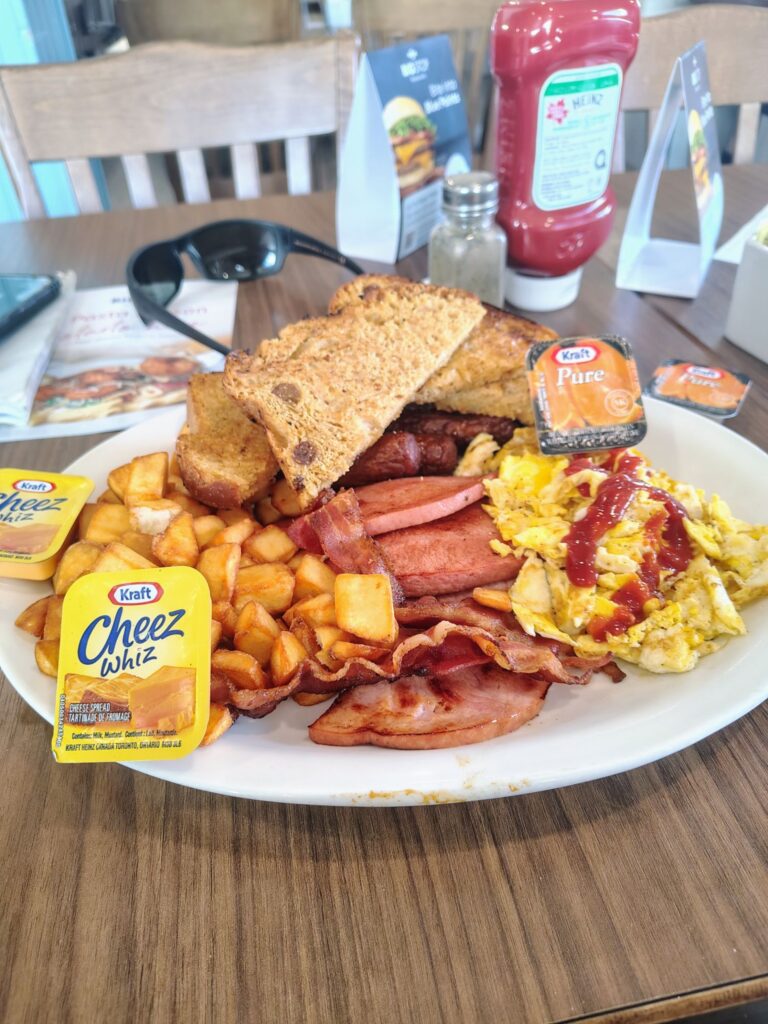
I’ll just say the Wharf Rat Rally was an anticlimax. Rain chased away most riders, and what normally brings 10,000 to 20,000 people into the town of Digby probably only brought a few thousand (optimistically). When I went on Sunday — the final day — there were about 10-15 bikes parked on the empty main street and the vendors were closing up their booths before noon.
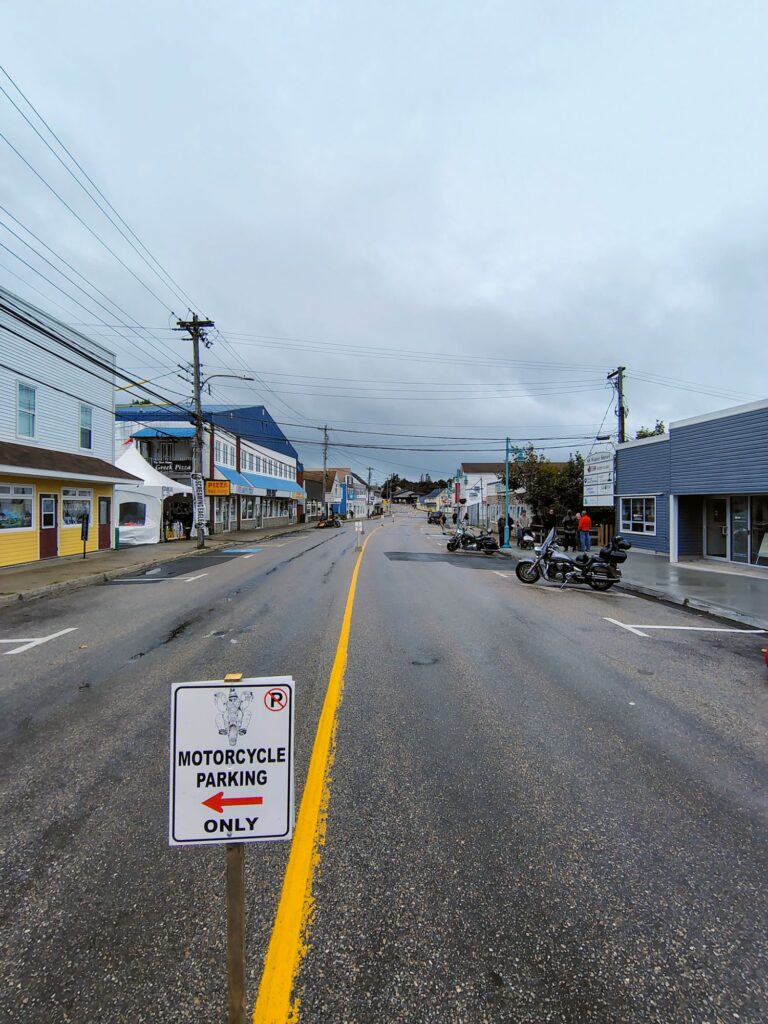
I did manage to hang out with my friend Chris, and helped his wife make a pear crisp from fruit pulled right out of their backyard (totally worth it). After that I traveled south to Lunenberg, but instead of looking for rappie pie or other local foods, I tried out a BBQ joint. They did some pulled-pork tacos that really hit the spot, and the several local beers were well suited for smokey meats.
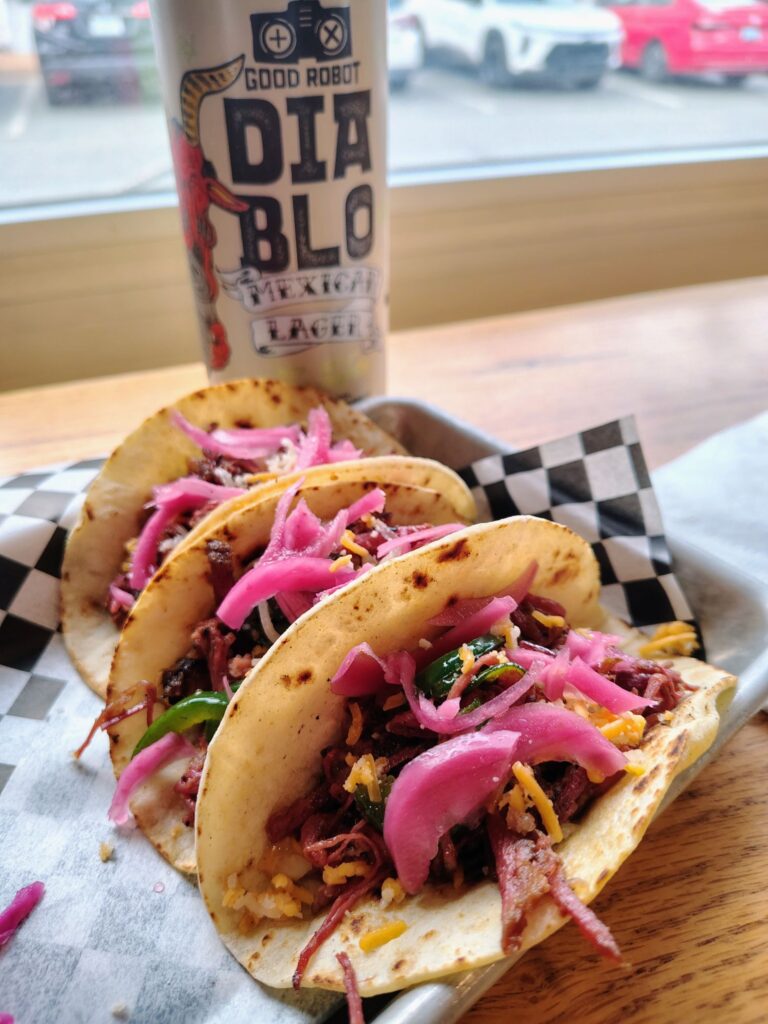
Then I went to Halifax with a specific mission: the King of Donair. The Greek food was popularized in the 1970’s in this very town by this very restaurant, which does have a second location, but maintains their original spot as well. Peter Gamoulakos started selling the Greek handheld out of a pizza shop, but only other Greeks seemed to be interested.
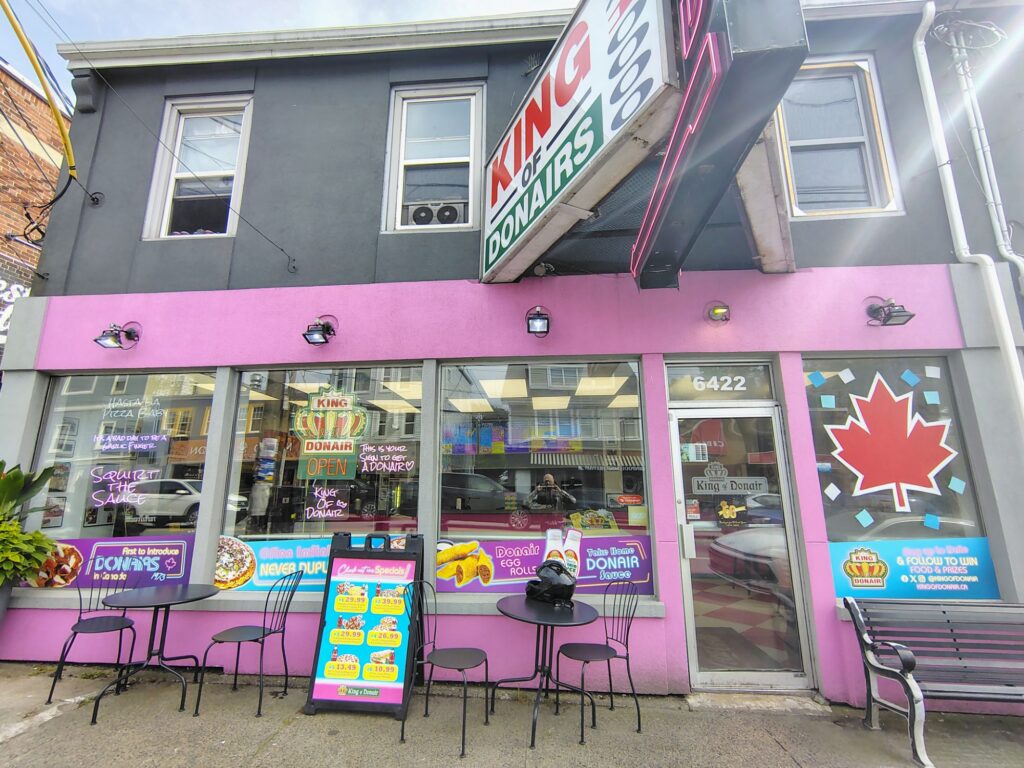
Betting on the tastes of locals when they were stopping off for a slice late at night, he invented his own sweet sauce to replace the yogurt-based tzatziki (using condensed milk as the base instead), and switched out the lamb for beef. I’d say his plan worked, as Halifax proclaimed donair to be their official food in 2005, and the shop is still going strong.
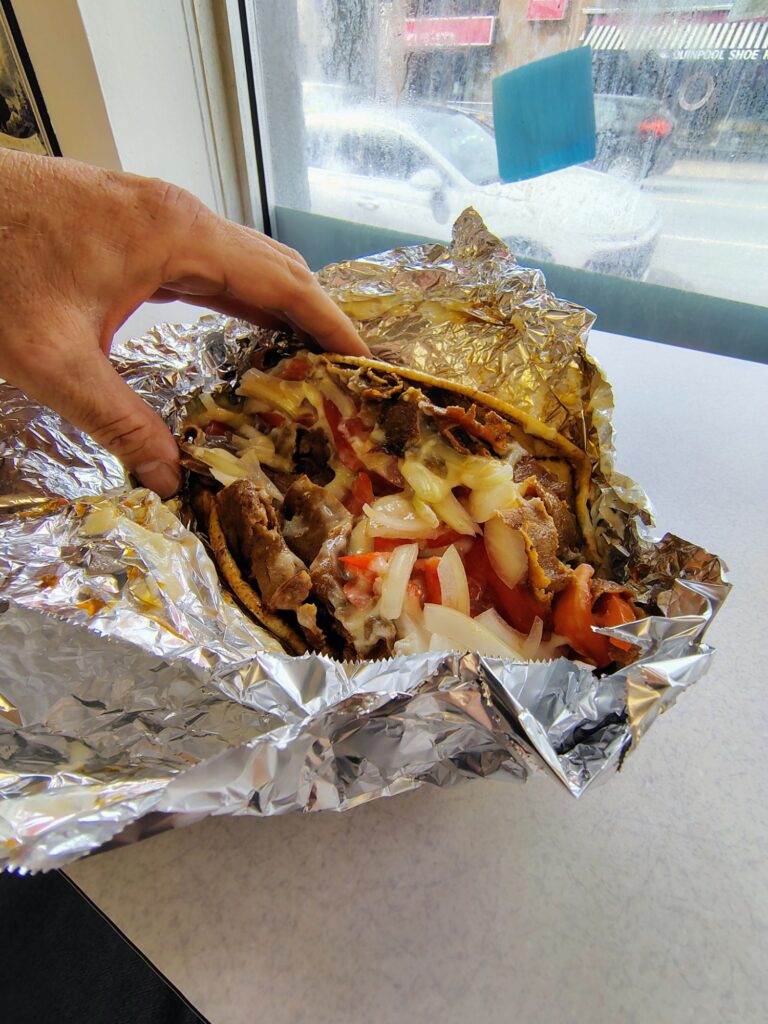
I found it really good, but I honestly prefer the traditional style. The sauce is very sweet and great in a small dose, but this was to be my only meal for the day, so I ordered the XL and was eventually overpowered (though I ate the whole damn thing, mind you).
They have some other versions available too, but I opted for their classic so I could see what the fuss was about. Definitely worth a stop off if you’re in Halifax. But now let’s talk about The Rock, Newfoundland, and its own strange tales of culture and resilience… and flavor.

Onto the Rock: Newfoundland
There’s a strange ceremony the Newfies have called “Skreeching in.” It struck me as a tourist gimmick so I skipped it, but I did have to sample the spirit it is named after. See, Newfoundlanders spent a lot of time catching fish and seals so they could trade it with Caribbean islands for their dark rum. It eventually earned the name Screech and there is a specific brand that carries the name, moving it out of generic slang and into the lexicon.

While on the ferry over I had a shot. It was not good. If you like your rum really dark and thick, unbalanced and with way too much spice, you might like it. I found it wasn’t even that great for mixing with Coke, but I reckon if you’re out on a cold fishing boat covered in fish guts and salt spray, it might be the only thing that cuts through the cold and the stink.
The screech in ceremony involves visitors taking a shot of Screech, kissing a frozen cod, and reciting some sort of pledge about being a Newfoundlander, which then makes you an honorary Newfie. It’s done as a bit of fun for everyone and isn’t meant to be a joke at the visitor’s expense, but when every bar has a Screech-in price on their menu (usually $20CAD) and most places use a plastic or rubber fish, well…that’s just not hitting me in the heart.
It’s okay. Things get commodified. I like the saying “it’s only kinky the first time,” because the truth is, doing something for the 10,000th time is going to teach you how to do it efficiently.
A little bit on the real side
Now, I did have some authentic experiences. I can tell you the number one thing I learned about the rock is that its people are beyond kind. If you offer to buy a cigarette off one, they’ll give you two for free. Be careful waving at someone if you are on the side of the road, because if they don’t recognize you they may double back to see if you need help, then talk to you for twenty minutes about their own part of the island, then ask about your travels.

Such was the case when I was heading up to the L’Anse aux Meadows Historic Site. I’ll say quickly, it was a cool spot, but the site itself is some lumps in the ground and four replica sod houses. The story of the place is the real reason to go. Anyway, I was heading up the north peninsula and it was cold and fairly damp, so I pulled into a gravel lot to look for a place I could actually afford so I wouldn’t have to wild camp that night.
Oddly, I was actually in the parking lot of a B&B, but I couldn’t get any pricing info. It looked closed for the season, but when I tried the door it was unlocked. Inside was Lynn, the purveyor of the Wildberry Country Lodge. While most spots up there were $160-$229CAD-per-night, Lynn was asking $120 cash money. Sold.
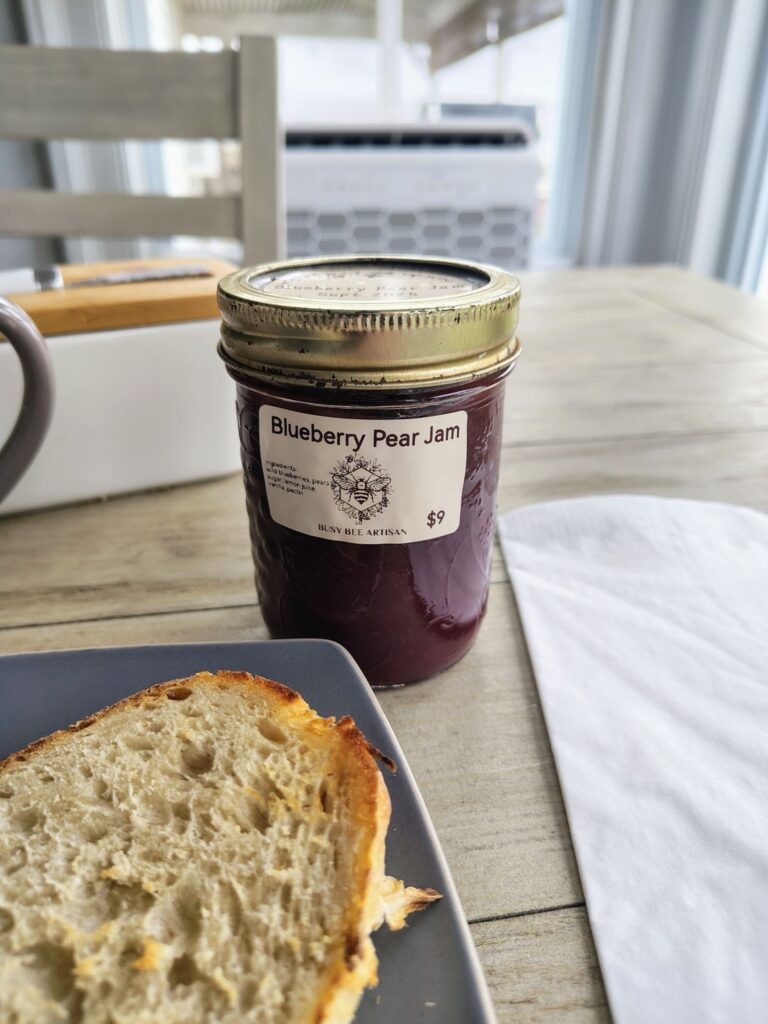
I ended up staying a second night, and then Lynn let me stay a 3rd night for free because it was rainy all day and he was getting ready to close for the season anyway. Basically I was doing him a favor by helping eat all the food that would no longer be needed in the winter. That kind of Newfie hospitality takes some getting used to. It’s common, genuine, and comes at you from all sides.
Lynn’s mother still makes jams from hand-picked berries, so I got to try partridgeberry and blueberry jam along with bacon jam, which I’m still not sure is made with bacon (here is one recipe but I have no idea if it’s the same as what I tried). I also had cod tongues here, as Lynn’s friend had dropped some off.
Lynn was an interesting fellow, living out in this remote hotel year-round since the 1980’s, needing a snowmobile to get groceries most the winter, fixing and upkeeping the place until the coming spring.

He was up in the howling wind replacing roof shingles when I left, but when he saw me loading up my bike he insisted on making me an omelette before I took off, which consisted of 7-8 eggs, an entire pack of mushrooms, green peppers and jalapenos, along with some bacon and cheese from that morning. I mean, the guy puts a Jewish grandma to shame the way he is just constantly feeding you, then he made me take half the leftovers in a to go bag.
I really enjoyed the silence of the place, drinking tea on the leeward side of the hotel, and looking out at the rolling hills and the evergreens. The place was simple but the food was amazing and plentiful, with the hospitality being the crown jewel.
Cold plate & moose soup
One food I didn’t find during all my research was cold plate. It’s meant to be easy sustenance, so it’s often available at gas stops and delis. I learned about it at a hospital though, and learned an awesome travel tip while at it. And no, I was not there because something went wrong.
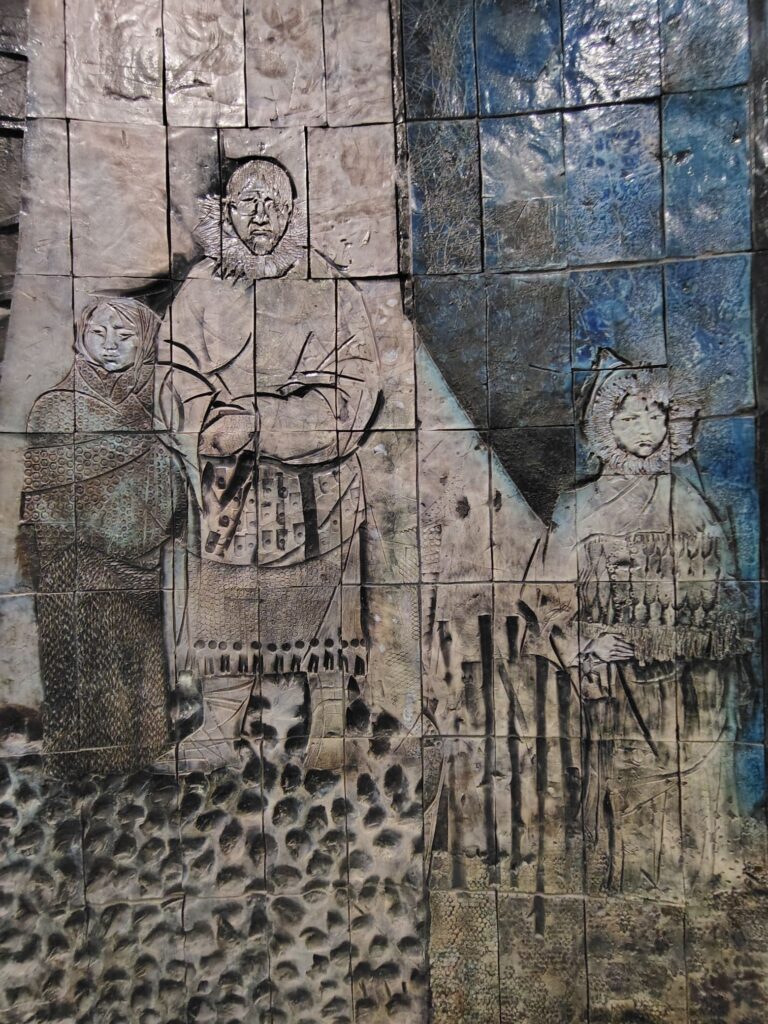
The hospital in St. Anthony has a famous lobby. The Charles C. Curtis hospital opened there in the 1960’s, and a famous one-armed sculptor by the name of Jordi Bonet was chosen to do an installation.
He carved reliefs in several ceramic slabs, making the walls and center pillar into a storyboard of indigenous life, and a dedication to current and future medical workers of the island.
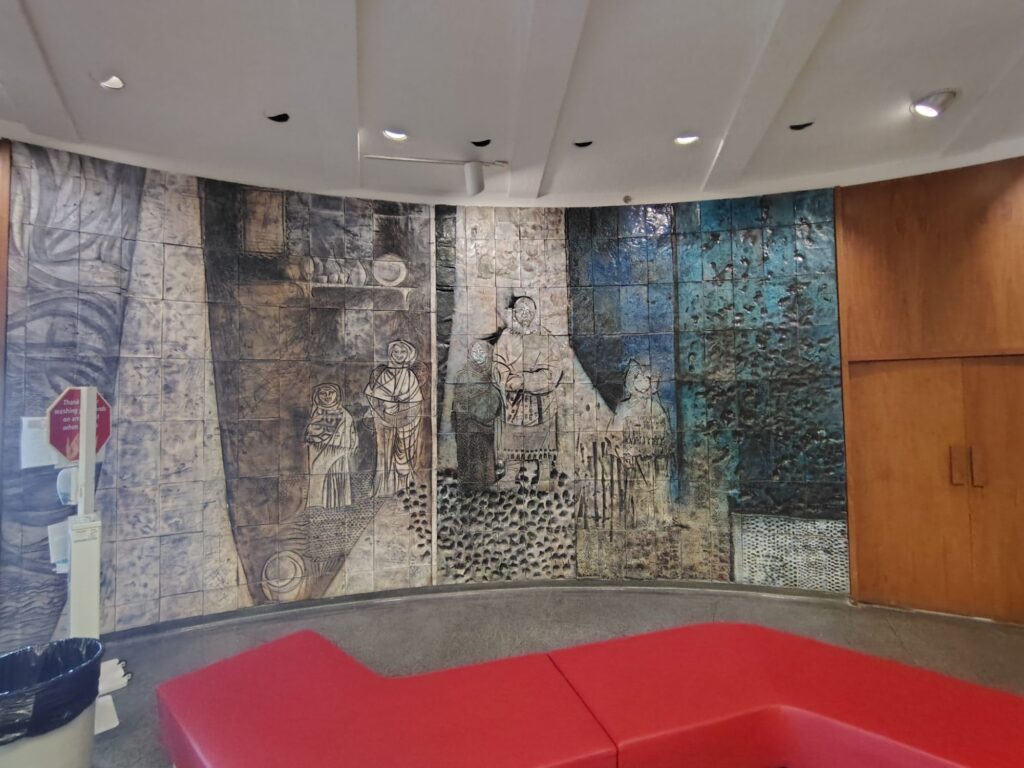
I asked about Jigg’s Dinner with the receptionist because Lynn had said they might do it on Sundays. Sadly no, “but they have cold plate for dinner,” was the reply. I nodded knowingly, but she could tell I, in fact, knew nothing. She kindly explained it and said it was only $8CAD, which is a stunning bargain.
LESSONS LEARNED:
1. It is still better to talk to a human for 2-minutes than to research online for 30.
2. If you don’t know what something is, ask.
3. Much like rural airports can be a great place to find good food (they try to convince Sunday hobbyists to land for fuel and breakfast, so they’re competing with other airports, not other restaurants), a rural hospital might be the only place making decent, plain food for the masses. They aren’t in it for profit, but if enough locals come in for a to-go box, they’ll make extra beyond staff and patient’s needs.
Now, cold plate is simple. You’re gonna get a piece of turkey, a piece of ham, some coleslaw (a touch sweeter and more finely chopped than in the US), and some potato salad (more mustard based than in the US).
Usually a desert comes too, but it’s simple like a partridgeberry jell-o cube or a cookie. You might also get cranberry sauce to go with the turkey, and the ham may be a thick slice or 1-2 deli-thin slices. For some reason you also get a slice of tomato and lettuce, just so there’s a vegetable included.
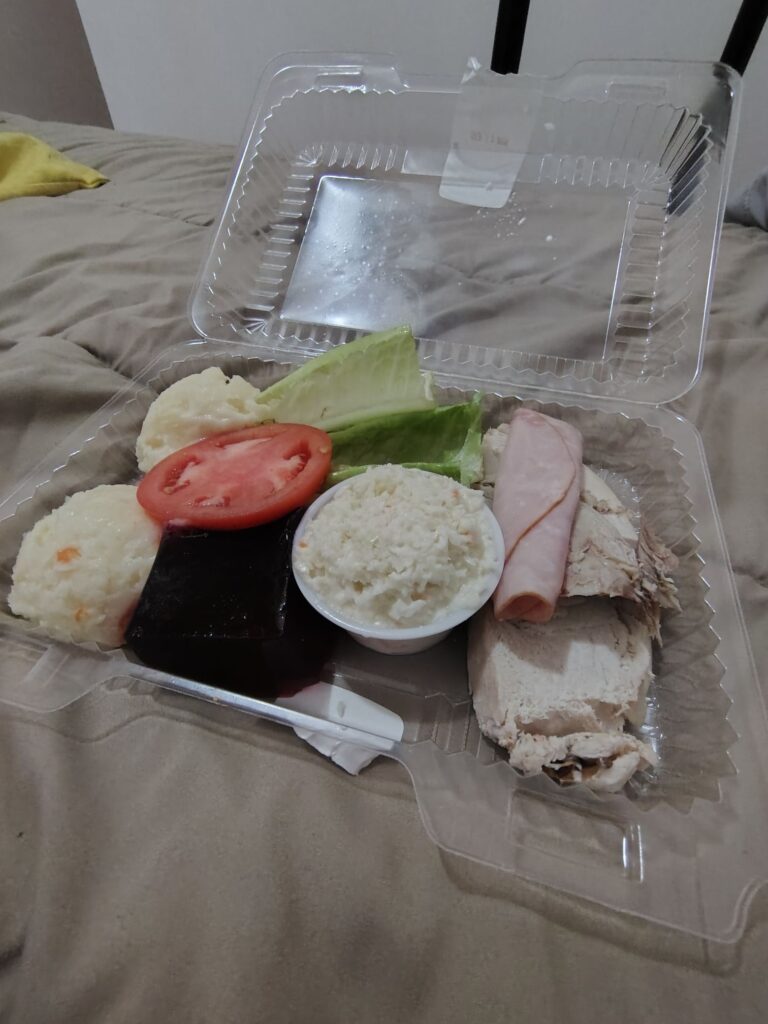
Having secured two to-go boxes of cold plate I was on my way east, to see the island’s biggest city, St John’s.
Other Newfie dishes
St. John’s is a fairly long story in its own right, and I’d like to steer us away from a travelogue and into a cultural dive: an attempt to understand the island by its foods. While many traditional foods have fallen out of favor, modern traditions are no less real. The turkey with dressing sandwich is a common staple in delis and gas stations with a sandwich counter. The mix is somewhere between chicken salad and just rough-chopping some leftover Thanksgiving turkey, but it isn’t mixed with the breaded stuffing an American would think of. Or, the end results isn’t like that, at least.
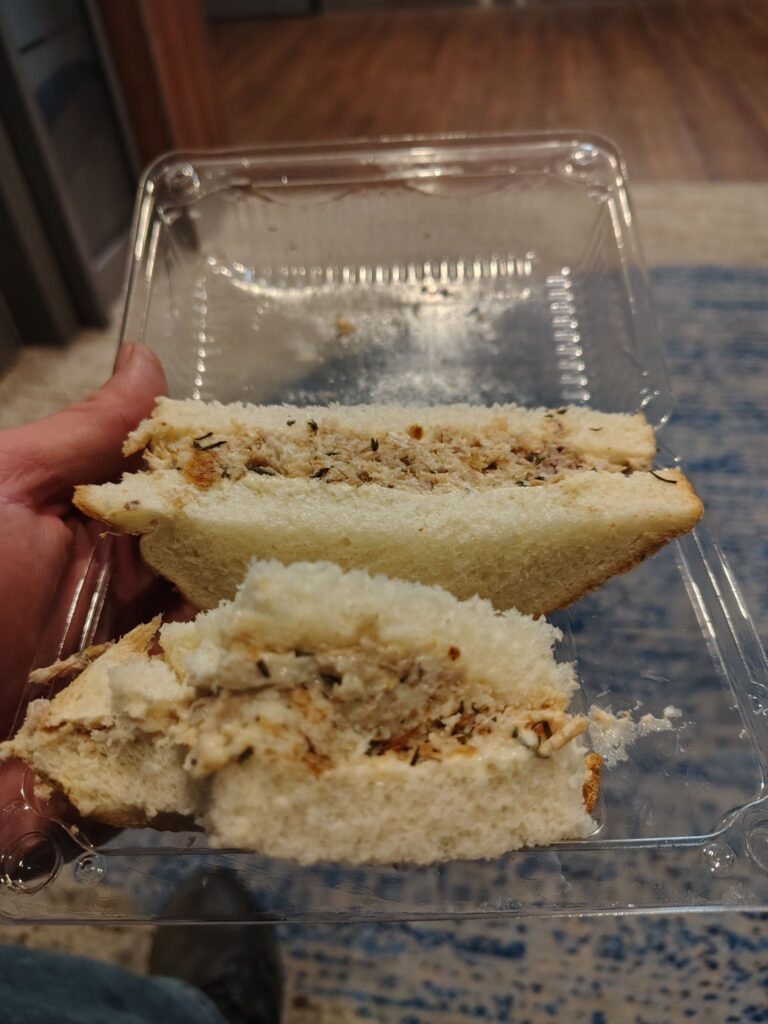
Now, the dressing starts with breadcrumbs yes, but despite not using mayonnaise it has a kind of texture like mayo and thick breadcrumbs were mixed together. Usually the mayo is just spread on the bread before adding the stuffing and turkey, but I know there are more variations than what I had (I only had the cold, ready-to-go style, but it can be served hot and open faced, smothered in gravy). The big difference is the flavor though.
There is a local herb there called savory, or summer-savory (Mt. Scio is a popular brand in NL), that is added along with (usually) onions and butter. Cranberry sauce might be served on the side or small amounts mixed into the dressing or just spread on the bread with the mayo. Point is, it’s thick: a proper meal between two thick slices of bread. It’s also easy to make from hand pulled leftover turkey (the turkey dinner and hot turkey sandwich are extremely common Newfie meals). It’s clearly not an old-time staple, as turkeys are much newer to the island than duck, goose, murre, and puffin.
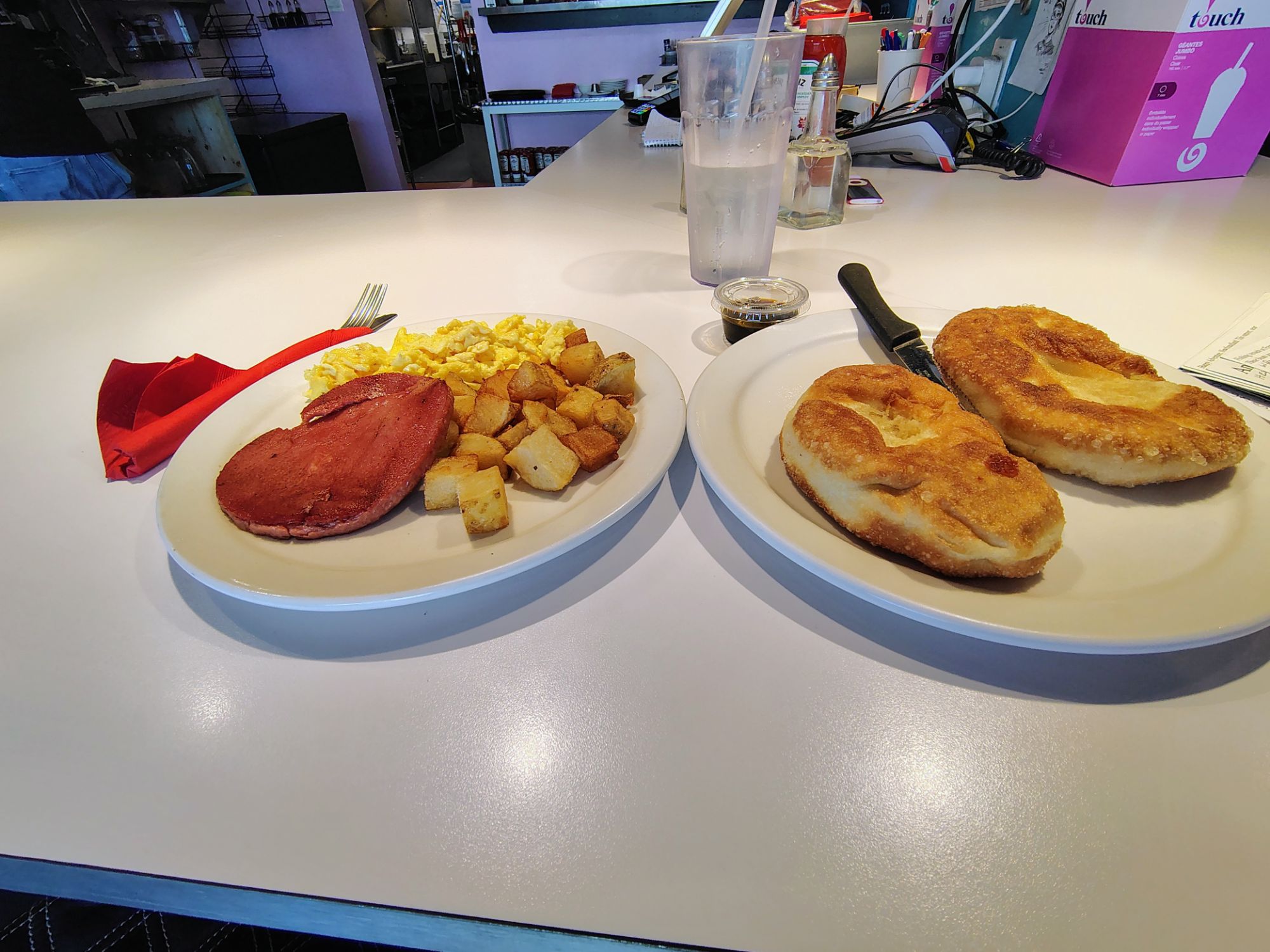
Another long-standing staple on the rock is Moose Soup. You don’t see it in stores often but it’s in a lot of people’s freezers along with wild caribou and even black bear. You’ll never see bear offered in a restaurant, but moose burgers, soups, and stews were common, and usually simple. Because moose isn’t very fatty, the soup can be thin and runny, relying on slow-cooked bone marrow or shank meat to add thickness, but there usually isn’t much to it no matter how it’s served.
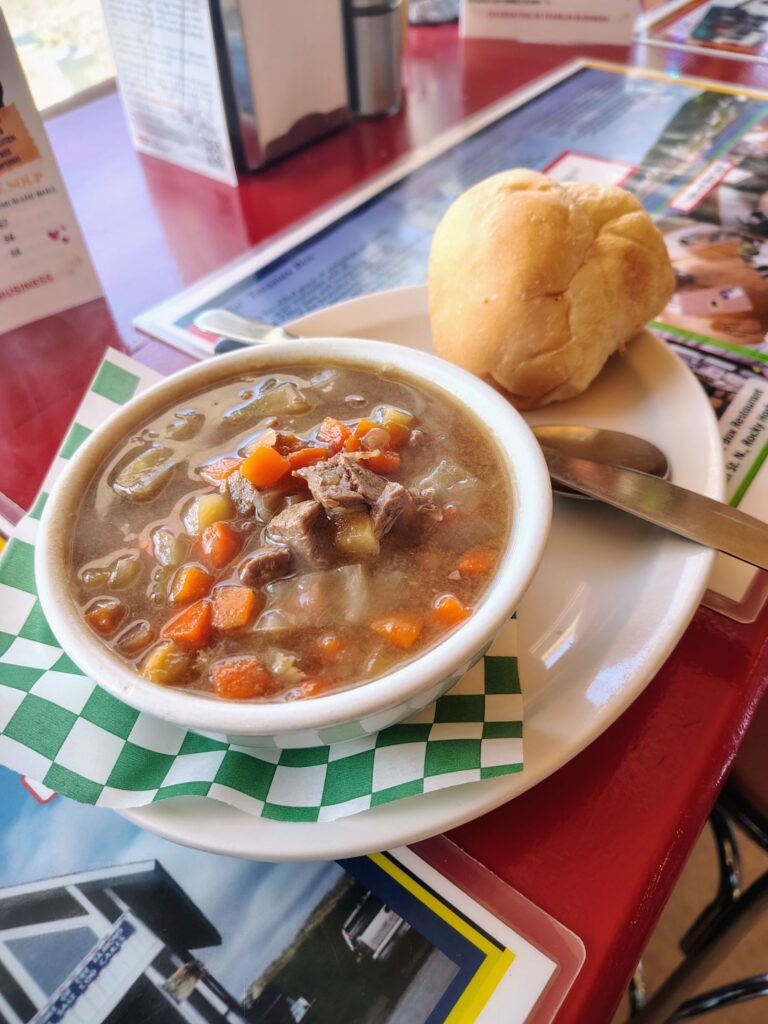
My order came with carrots and onions and small cubes of potato or possibly another tuber. Being so simple, the carrots added a welcome sweetness while also absorbing some of the moose flavor. The dinner roll was very plain, but was a welcomed way to sop up the last of my order. I also tasted some partridgeberry pie, but it was oddly tart (I’m told the berry itself is sweet). Fortunately the vanilla ice cream that came with it balanced things out.
Off island
After about three weeks the weather was starting to hint that I should be on my way. I grabbed one of the last ferries from Argentia (read it again, that’s the correct spelling) and made it back to the mainland. I didn’t get to see puffin, as they were out to sea about 2-3 weeks before I arrived, so I’ll need to come back no doubt. I also owe you some words on St John’s, George Street, and the history of Gander.
And I need to ask the world why the town of Dildo is so close to the town of Spread Eagle, and how the early explorers managed to get cartographers to accept these names and actually print them on maps. These burning questions will have to wait for another installment though. I’ll put together a short post with more succinct thoughts about Canada’s easternmost province along with a shorter lists of places in the Maritimes I visited.
That piece needs to be broken into short sections with each province of the eastern seaboard, so I suggest signing up for the weekly dispatch to get a notice when that piece goes live. Until then, keep your questions coming and your wheels pointed toward the open road.