

Oatmeal remains one of the easiest and most filling breakfasts out there, and it has a bad rap as being unhealthy. Instant oatmeal often is, because it has a lot of added sugars and additives to stop them from clumping together in their pouches. But actual oatmeal is literally oats. They’re the only listed ingredient.
Of course they really act as the base of a healthy breakfast. Gluten free and full of fiber, they still need a boost of vitamins as well as some help in the flavor and texture departments. But they’re perfectly designed to take on your own personal tastes. The first thing to remember is you don’t have to dirty two dishes. Instead of cooking them on the stove, simply fill a bowl with oatmeal and add enough water to cover them.

Throw them in the fridge overnight (at least two hours) and then simply heat them in the microwave. They may need a little extra water before that, but you’ll get the hang of it. Soaking your oats doesn’t just them up faster either. Enzymes in most grains are activated by the water, allowing them to break down phytic acid, which bonds to some of the nutrients in grains and reduces their bioavailability (ability to absorb into the body instead of passing through).
Many commercial oats are dried using a steaming process though, so the enzymes may not be present in sufficient numbers. Some people add a spoonful of yogurt with the water to counter this. Lemon juice and apple cider vinegar are also popular for this purpose. Soaking oats also aids in digestion and can help with beta-glucan absorbtion in the gut (a type of fiber, and hey, fiber is good not only for digestion, but for absorbing bad cholesterol and triglycerides).
After they’re heated you just add in what you like. This is a great way to get ride of an overripe banana, as it helps with flavor and texture. My must-have add-on though is Greek yogurt. Creaminess and protein.
While I have to do without when at the bivouac, at home I add a large dollop, adding some tang and smoothing the texture while also getting pre/probiotics. You can get some of those nutrients out on the trail by bringing powdered yogurt, but it doesn’t do the same magic with the texture. Berries are almost always included, because you can have dried ones at camp or fresh/frozen ones at home. Vitamins, ho! I also like to add a nut butter.
Usually it’s peanut butter due to the cost, but I still use a brand whose only ingredients are peanuts and salt. If you want more sweetness you can go for the hazelnut spreads like Nutella, just remember to use a small amount as the calorie count is closer to a jam than a nut butter. You can mix in jam too though it’s not something I do often. But hey, the concept is to vary things so you aren’t eating the same breakfast every day.

I then finish off with a healthy amount of cinnamon and usually some honey if I need some sweetness. To add in a crunch and also the nutrients and oils, I add an unsweetened granola. The seeds are healthy and the dried oats have a crunch. Just watch the label to make sure the granola you use hasn’t been sprayed with corn syrup or cane sugar (or any added sugar).
Variations on a theme
Do it any way you want though. If you want sweet, just aim for simple sugars instead of refined ones. Fruits, honey, jams, cream or whole milk, real maple syrup or agave nectar. You can chop up dates or just add brown sugar. And remember that oats don’t have to be served sweet: for centuries they have been used in savory dishes.
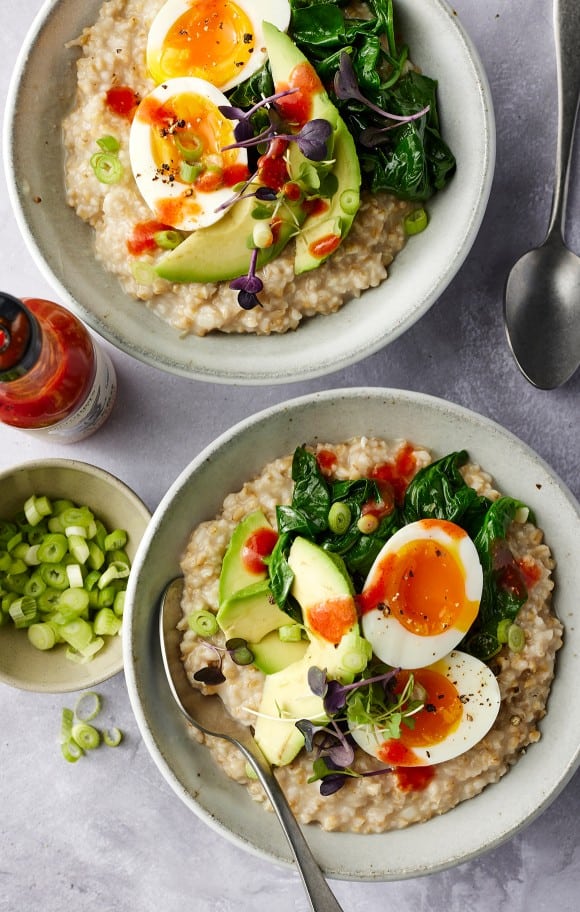
Click on the image for the recipe. Via Life and Lemons.
They can be cooked in bone broth or a mushroom tea or vegetable stock. You can add onions of leeks, kale or mushrooms, shallots and roasted cherry tomatoes, or even squash. You can add smoked salmon and capers (sounds weird, but get the balance right and you’ll be amazed) or crumbled bacon and coffee, rosemary and thyme, or just butter and salt. Sour cream and chives? Yes. Cream cheese and lox? Sure…you can even toast a bagel and crumble pieces in there.
Remember that oats have been used as a thickener for soups throughout the Middle East and Northern Africa, and have been fermented to add bite along with probiotics. I’m not going to give advice on that part; you need to learn about fermenting foods on your own, as a lot can go wrong as well as right. Just understand that rolled oats are a staple because they survive unrefrigerated, carry a lot of calories for their dry weight, and can be parceled out in helpings big and small.
On the road…
Oats live in my camp kitchen because they’ve been cultivated for thousands of years to ride with us as we expanded across the planet. I make them almost exclusively for breakfast yes, but they can also get added to breads or made into cookies. Overnight oats work fine outdoors too; you just need some cling wrap to keep the bugs away, and ideally a bear-proof box if you’re in bear country.

As I said above, dried fruits take over for fresh. You can add Greek yogurt powder also, to add protein and probiotics, or even powdered milk and lemon juice (remember lemon juice can be found in packets at some places, which is great for travel). I recommend mixing the lemon juice and powdered milk first (with a small amount of water), then adding it into the oatmeal. Some people even mix protein powder in, but I try to keep things a bit closer to the Earth myself.
The main problem is usually these powders are sold in 1lbs containers or large but resealable pouches, which might not be ideal for hikers and bikers, but it’s a great solution for car campers or the RV life. But you can always subdivide. When I’m on the road long-term here in the USA, I’ll sometimes mail ahead to a friend’s place a resupply kit filled with everything from hard-to-find ingredients to a new book to read; it’s like a welcome bit of luck because I’ve usually forgotten, and I arrive to a present I left for future self.
The point is to get creative and to realize the wide potential for something like oats: they aren’t just a breakfast food.
Leave a Reply