
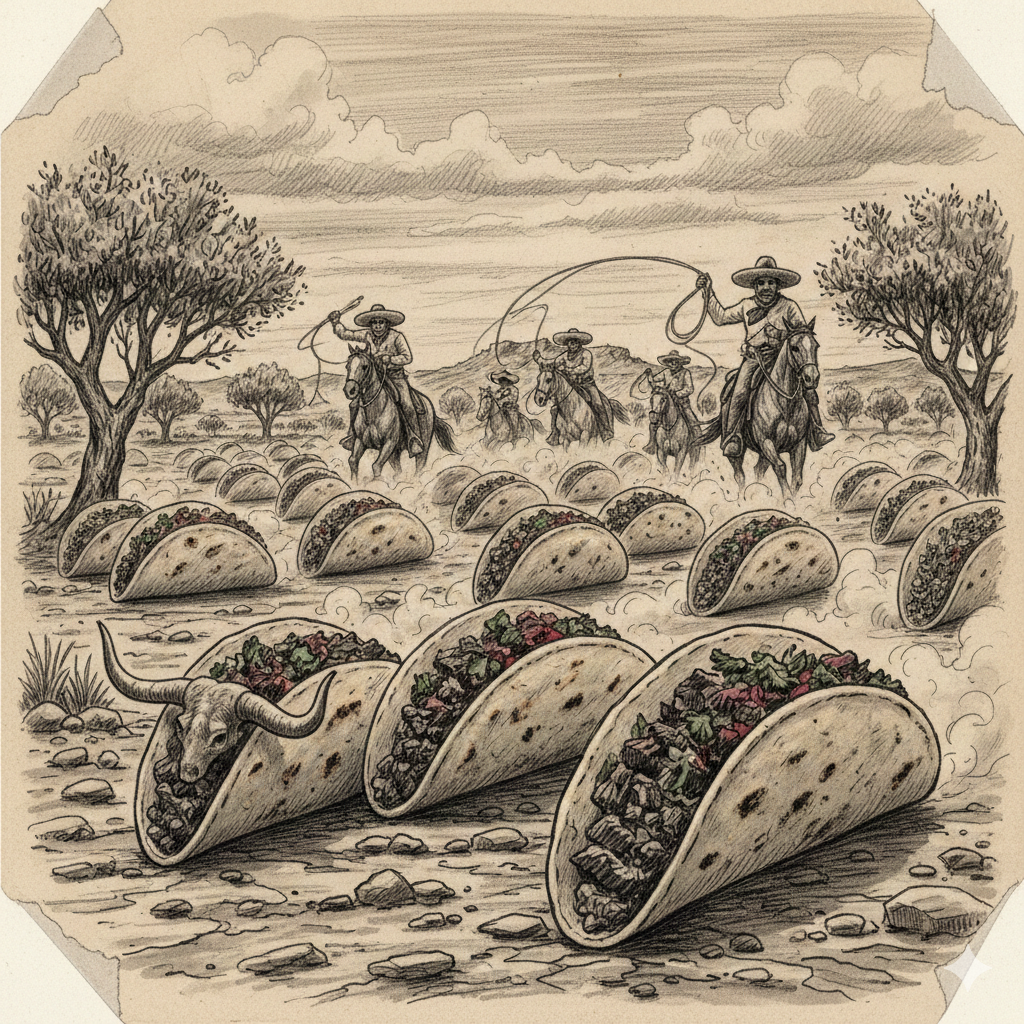
In the second of this two-part series we explore the migration of the taco from the mines of Mexico to the streets of America, its conquest of broader America and its rise to “elevated” status, earning its own emoji and tribes of rabid fans who argue ingredients like they are religious texts. Part 2 begins… welcome to America: ¿te gusta chili?
Quick Take:
- The taco has spread from a food staple to a cultural force, evolving with people as they moved.
- Its long history has led it to branch into fusion cuisine, breakfast food, and midnight snacks
- Fast food culture created the “gringo taco” and further broadened the landscape
- Tacos remain both a working-class staple and humble street food while also being an international cultural ambassador
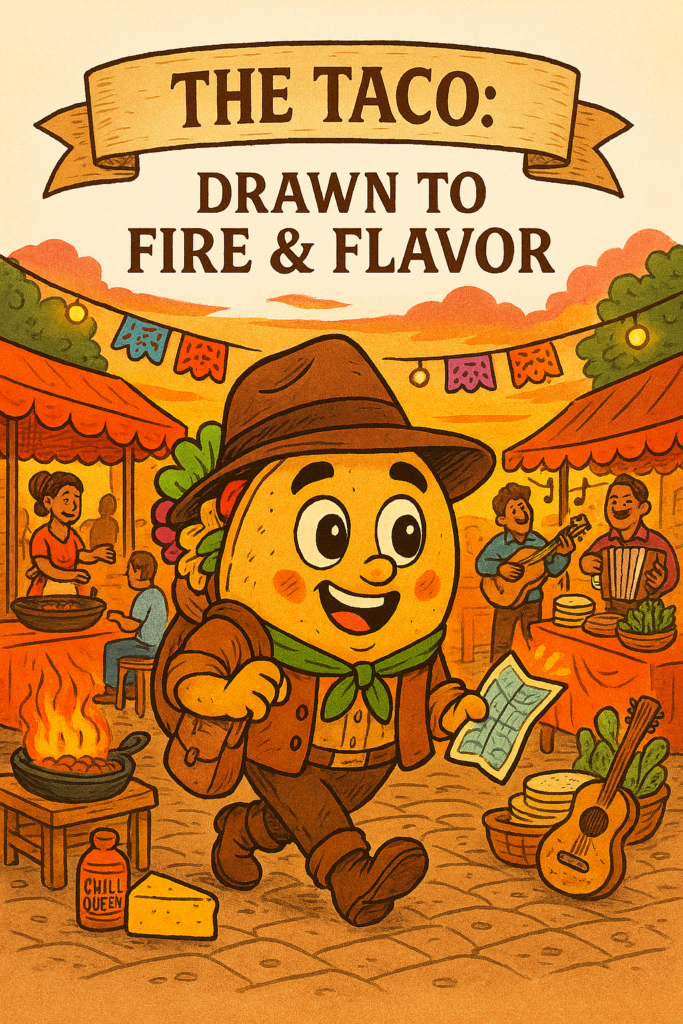
The taco’s life in America
The story of Glenn Bell and his attempt to create a fast food taco is a topic unto itself (and we’ll get there in another installment). However, the taco did more than become a deconstructed cheeseburger when it came stateside. Just like the Mexican immigrants who crossed the Rio Grande, the taco had to adapt to new ingredients, new rules, and a different pace.
The historical center of this movement is San Antonio, Texas. It’s around 1900. Open air markets are alive with music, bustle, and the smell of food being cooked over mesquite fire. This is the era of the Chili Queens. These Mexican and Tejano women brought ingredients to the food courts so they could cook up their recipes on-site. The scene grew buskers and other musicians, railroad workers and passengers, with sights and smells creating a jovial and exciting scene that anyone would be drawn to.
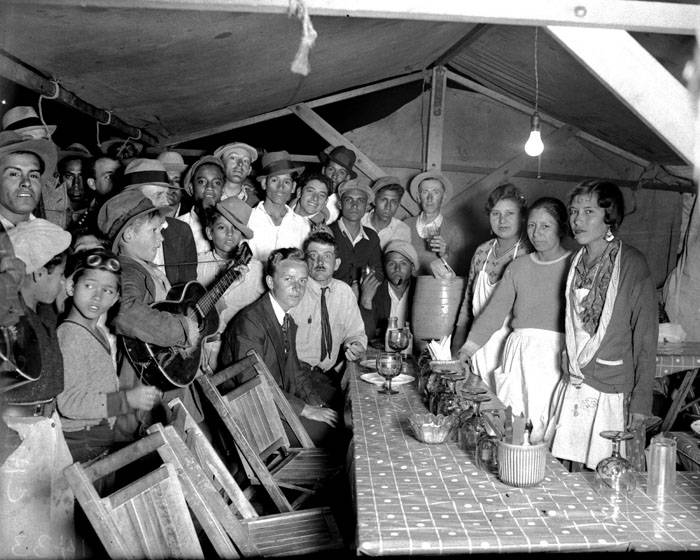
The taco of this time and place was a street food, feeding not only day-laborers and railroad travelers on a tight schedule, but late-night revelers on their way home, in search of a quick bite. The taco shined in this roll compared to the stews, enchilada plates, and bowls of chili con carne the Chili Queens were better known for. In these places of cultural exchange, most Americans got their first introduction to the taco.

And the change continued. Ground beef was easier to procure than the thin sliced skirt steak used for carne asada. Cheddar cheese was the de facto choice, as it’s what the local markets had. Some time in the 1910’s-1920’s, cumin also became a bedrock seasoning. Historians actually point to the Canary Islands for this change. No, really.
As far back as the 1700’s a group of Canary Islanders created settlements in the area, bringing with them their cuisine which in turn was inspired by their proximity to North African and Arab cooking, which heavily uses the spice. The Islanders found a great match with local chili peppers and cumin, which was later incorporated by the Chili Queens.
They may not look alike, but chili con carne and the taco were ‘hombres’ for decades in the open air markets of Texas, and learned a lot from each other.
A German helps nationalize the taco taste
You can thank a German immigrant by the name of William Gebhardt for it going national. He missed chili con carne so much whilst traveling away from San Antonio that he developed a shelf stable seasoning that could be added to ground beef. It took awhile, but it went national.
What we buy today in packets labeled “Taco Seasoning” is an evolution of Gebhardt’s contribution to the taco, via chili con carne. It’s worth mentioning also, there is still a Gebhardt’s Chili Powder for sale, proclaiming “since 1896.” Chili powder and taco seasoning are of course not the same, but if you are seasoning ground beef to make gringo tacos, your recipe is 90% there.
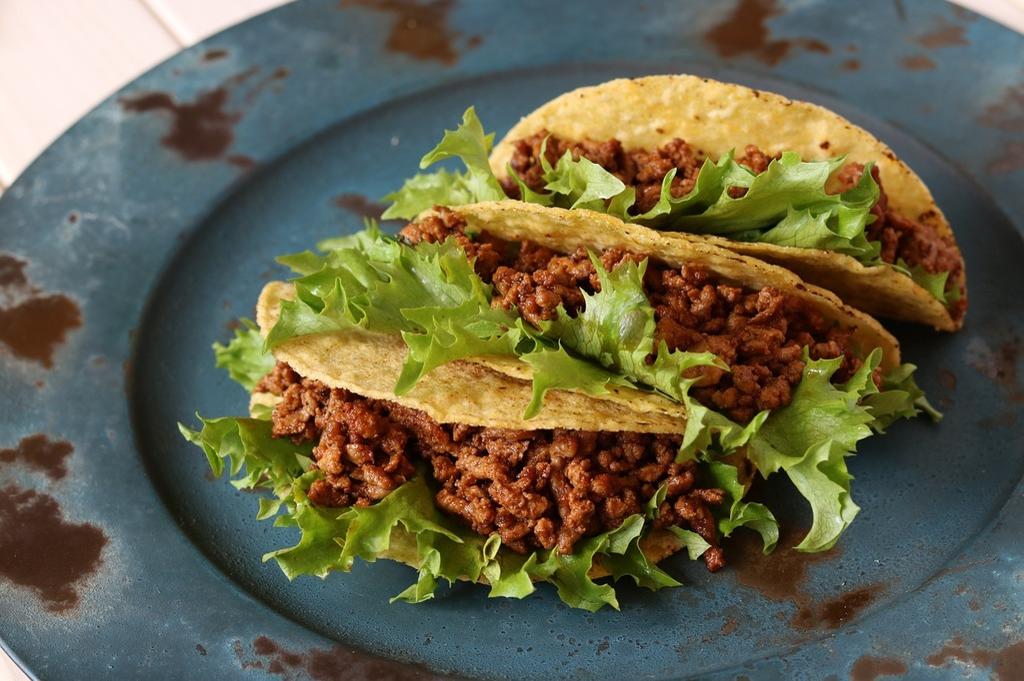
So yeah, the “gringo taco” that is much maligned by taco purists is actually the result of nearly two centuries of influence from Mexican, Tejano, Canary Islander, and American sources, with the help of a German immigrant to launch things. Even the hard shell is a Mexican-American invention, with tacos dorados (golden tacos) being made in borderland restaurants from at least the 1940’s.
But as stated in Part 1, that is part of the story that led to Glenn Bell’s mission of industrializing the taco, so it will have to wait for its own feature. But we’re at a perfect segue into the modern chapter of the taco: the “elevated” taco. Instead of taking a shot at the budget friendly “fast food that doesn’t pretend to be any better than it is,” I’ll raise my sights higher and declare it’s in poor taste to try and dress up the working class taco into something fancy. But I will make this argument from a firm position: that there are no bad tacos.
There’s a lot to unpack here. An Indian version of an American food that is a version of a Mexican food that came to the US, only after it took Mayan and Spanish roots and combined them with a meat pie from Cornwall? I mean you figure all that out: I’m gonna try this Indian Burger King taco…
No bad tacos: a personal reflection
There is no such thing as a bad taco to me; there are only misunderstood tacos. Taco snobs attempt to be gatekeepers, sacrosanct in their opinions of what constitutes a “real” taco. If you’ve been following along at all though, you’ll see the taco already borrowed from Spanish and Mesoamerican roots to even get started, then needed a kick from immigrant miners. The taco has been scrounging up what it can subsist on longer than there has been such a thing as Mexico. It is a hardy adventurer.
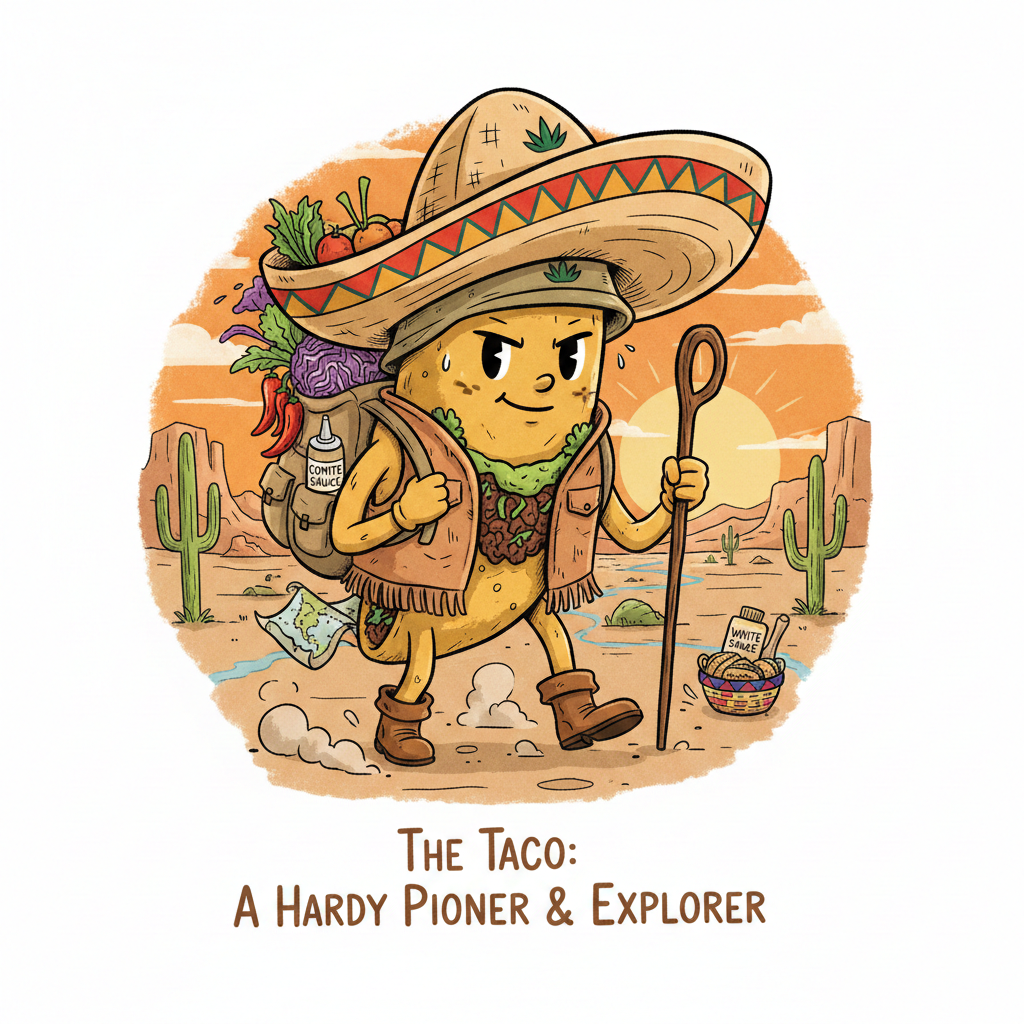
And because of that, the one thing I have mixed feelings on is the “elevated” taco. Coming from working class roots and moving up is admirable, but a $7 taco is an affront to my sensibilities. And stop with the “don’t knock it ’till ya tried it” bit. I absolutely have tried them, and they didn’t have lobster or saffron in them either.
Taco Guild is an old church in the Phoenix metro area converted into a Mexican restaurant. Their salsas are house made and fresh. Their tortillas are thick and have a texture like they were made with pride (and fresh ingredients). The meats are melt-in-your-mouth good, and with all the tastes and textures competing for attention, they still achieve balance. Without a doubt their tacos are a high form of expression: a veritable high-water mark for the taco’s journey through time & space.
But are they worth $7 a pop?

Well, I’m not going to tell people what to do with their money, just like I don’t want to tell people what they should or shouldn’t eat. I can tell you what I like, but that isn’t me trying to tell you how wrong you are for liking something different. I’ve had tiny little tacos at a Michelin star restaurant, each one smaller than a tortilla chip. They were heavenly, but were they really a taco?
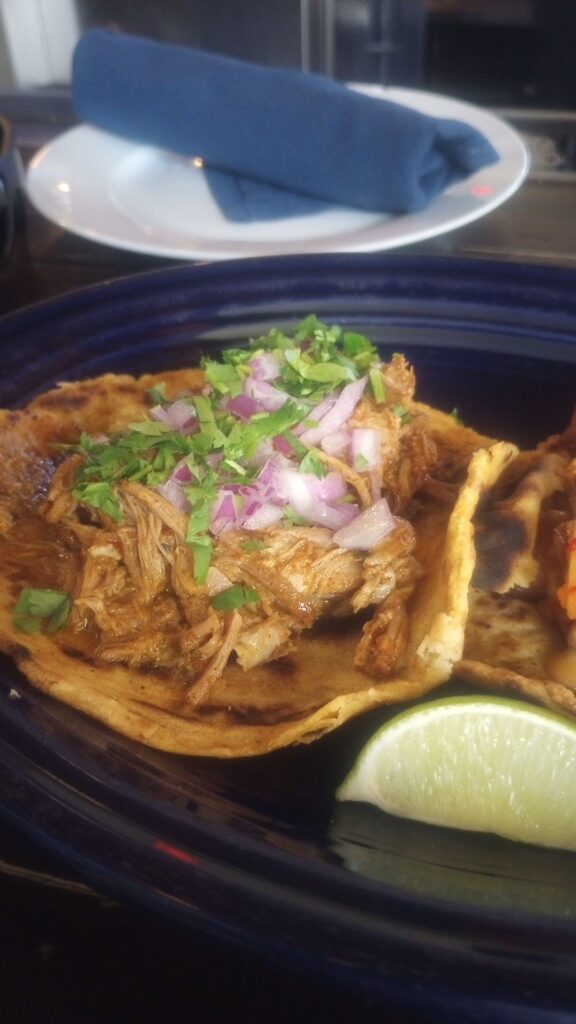
That is akin to answering “what constitutes art?” Personally, I’m more apt to call those mini-tacos dying under the heat lamp at 7/11 a taco. They’re truer to the root of what a taco was born as, and what it has been for centuries. And that’s the thing: “what is a taco” is a question that is about an ethos more than an ingredient list. It’s an expression of culture… of place, of purpose.
So what is a taco?
Which leads me to Torchy’s Tacos. This is an Austin, Texas based chain that has been storming the nation. It started as a food truck as far back as 2006 (humble beginnings? check) with a notion to explore what the taco could be (adventurous? check). What’s not to love about this story?
Well for taco purists..? Everything. The ingredients are very “not taco.” One of my surprise favorites when visiting their Denver, Colorado location was the Trailer Park taco (Fried chicken tender, green chiles, lettuce, pico de gallo, and cheddar jack cheese with poblano sauce, served on a flour tortilla). You’ll also find ingredients like Jamaican jerked chicken, mushrooms, mangoes, or spinach.
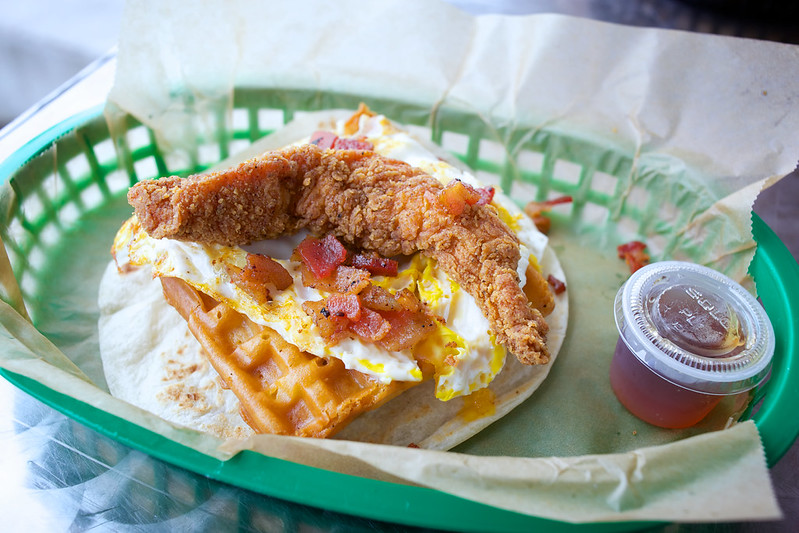
For purists this is sacrilege. But from what I hear coming from the purists, even Mexican ingredients are prohibido. Chicken fajitas and green peppers in a taco?!! Never mind that fajitas (like nearly all Mexican dishes) are served with tortillas, which work just like they did 2,000 years ago — to pick up food without getting your hands greasy.
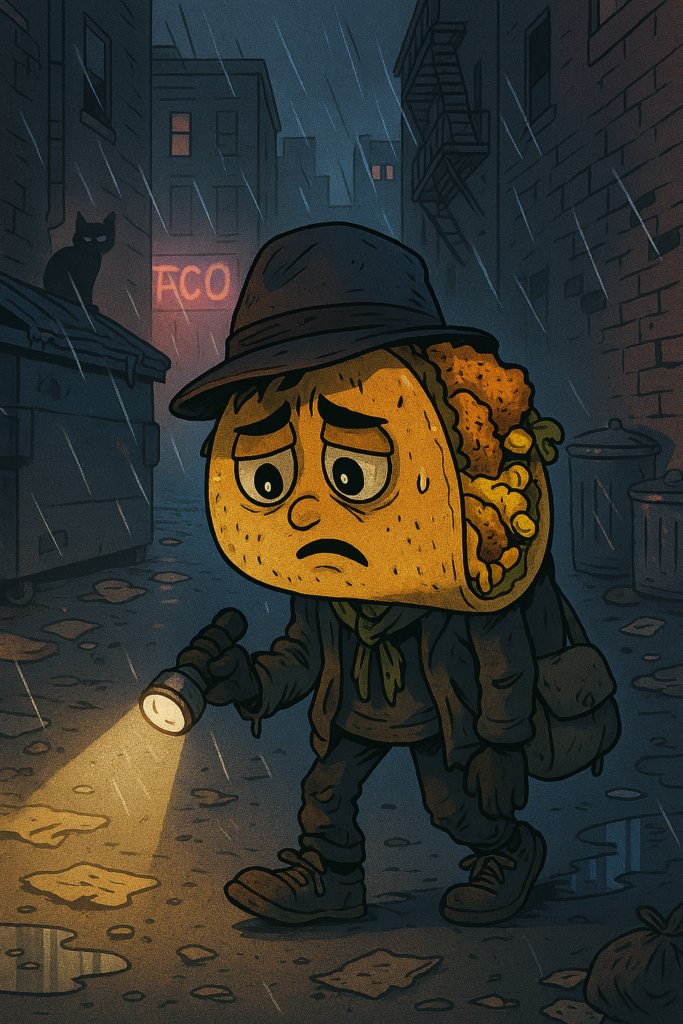
Torchy’s isn’t the only place taking tacos down the dark alleyways of the big city. I’ve had bulgogi tacos with kim chi, hot dog tacos (no surprise Los Angeles would combine two Mexican street foods, tacos and perros bravos), brisket tacos with pickles and BBQ sauce. Hell, even my favorite taco of all time turned out to be fusion cuisine.
Yes, tacos al pastor came about because an influx of Lebanese immigrants were doing their usual shawarma style street food. Mexicans loved the idea of cooking on a spit with direct flame. They replaced lamb with more readily available pork, pita with tortilla, and kept only a few of the spices. A distinctly Mexican style emerged.
It’s the culinary version of “I was doing fusion cuisine before it was cool.”
And the taco gets its star
I declare the world of today at peak-taco. You’ve now read how much it’s expanded due to the ground beef TexMex version. We watched it take on influence from five continents. We saw it take to the high rise restaurants of Haute cuisine, and its recent diversifying into trailer-park tacos and Nashville hot chicken versions. We even had to skip things like details of how Glenn Bell created a pre-made taco shell so a white teenager who’d never seen a taco could prepare them (fast) to order, and we didn’t even touch on how the breakfast taco owes its inspiration to Czech immigrants.
But it is the taco emoji that truly is the star on top of the tortilla tree. That is the beacon that says “we are at peak-taco.” Look at the available food emojis on your phone and you’ll quickly tell the Asian market is where these phones live. Multiple types of fish, noodle, sushi, rice bowl and dim sum are available. But there was no taco…
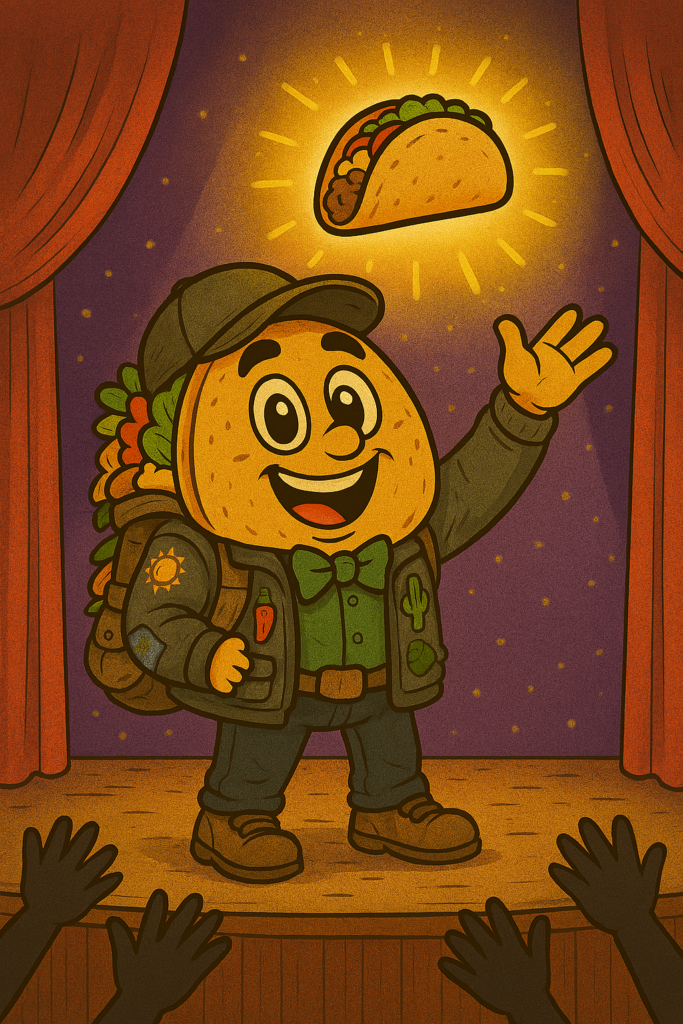
Starting as a cheeky ad campaign, Taco Bell created a petition to add a taco emoji. This actually gained traction, to the point where the Unicode consortium added a taco emoji. And the purists rejoiced, right? Umm…right??
Of course not. The emoji shows a yellow tortilla, which doesn’t have to be a hard shell gringo taco, but the toppings were the color of lettuce and cheese. Gasp! A gringo taco! Of course it was derided by the self-appointed protectors of the taco’s sacredness. But much like women are sick of people telling them who they are supposed to be, the taco does not stand for this. It will not be told what it must be.
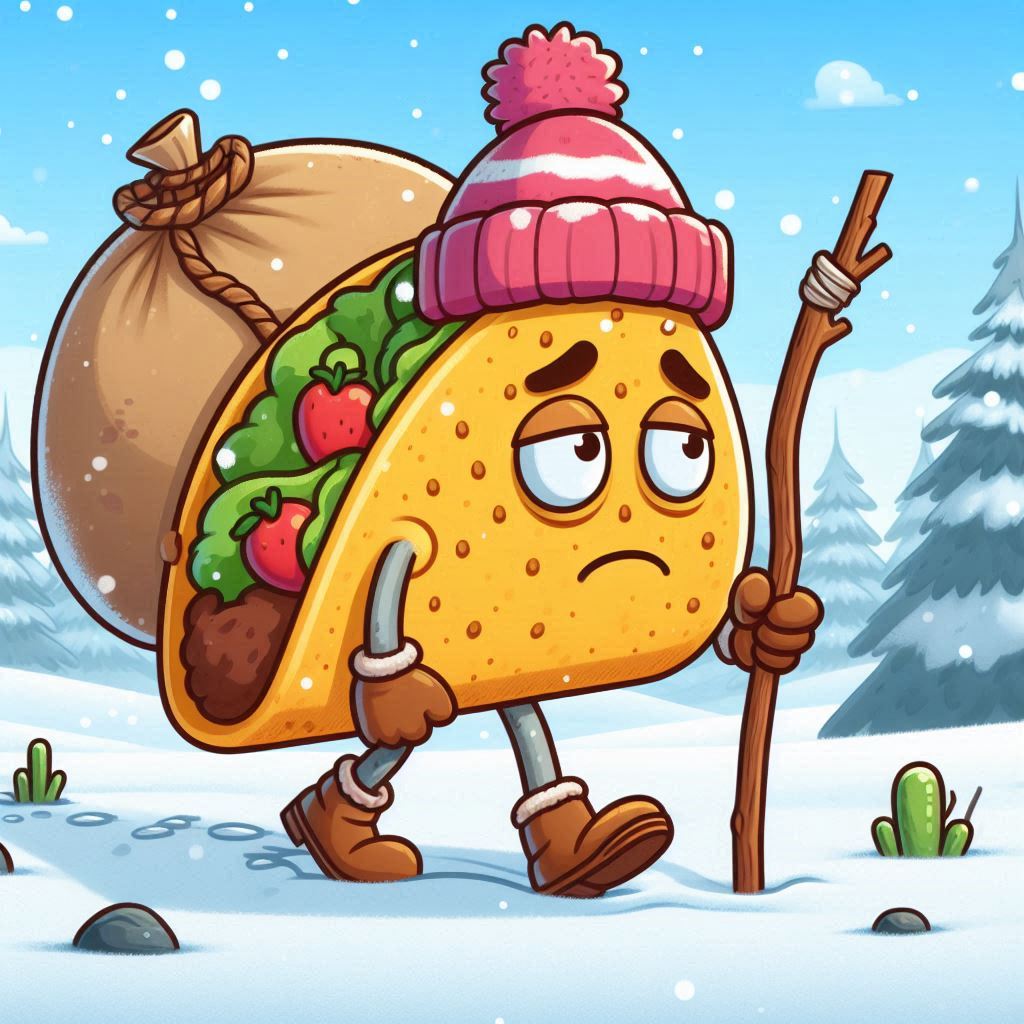
It has been exploring the caves, the desert plains and mountains, the urban jungle and the open ranges of this continent for centuries. It wasn’t even afraid to throw on its snow shoes and become the Choco Taco… well, until the makers discontinued them in 2022. Good Humor? Harrumph. But given a new terrain to explore, the taco is ever-ready. It will wear a flour or corn tortilla depending on the weather. It may don its golden armor in the deep fryer, or even roll itself into a flauta, but it will continue its journey, ever-forward.
We traced the taco’s origins back to the silver mines of Mexico, where the tortilla first served as a substitute for silverware and a shield against the dust. We followed its journey north, watching it adapt as wheat replaced corn and the “Chili Queens” of San Antonio fed a growing nation. We saw the taco survive the industrialization of the fast-food era and emerge on the other side as an “elevated” artisan canvas.
Throughout this history, we’ve seen that the taco’s greatest strength isn’t a specific ingredient list, but its refusal to stay still. It has borrowed from Spanish, Mesoamerican, Lebanese, and even Czech roots to survive.
Today, the taco is a global cultural ambassador, complete with its own emoji and a permanent place in our hearts. It is an expression of culture, place, and purpose. It doesn’t need gatekeepers; it needs torchbearers. And as long as there is a new frontier to explore, the taco will be there—moving ever forward.
So while people write about Columbus or Lewis & Clarke or Cortez or the Oregon trail, I will stand firm and say the taco, from its humble basecamp in the silver mines of Southern Mexico, has charted more North American territory than any of them.
-John Killmore
Enjoy the ride? Sign up for the Weekly Dispatch. Once a week at the max, my newsletter will go out to let you know what action is happening in the world of food, travel, and the human experience. Long-form introspection like this, recipes, short-form dives into a region or activity, and even some camping how-to’s related to keeping the camp-kitchen in fighting trim, or a fire burning evenly. One-click unsubscribe, advance news, alerts on upcoming events… we gots it all, brudder…
A final recap
- We got into the taco's origin by looking at the tortilla's role as a substitute for silverware. We saw the silver mining that gave birth to the name, and to the need to pre-roll food into a tortilla to keep dirt off it while miners worked. We learned how the basket taco (de canasta) created a street food craze.
- We followed the taco north where wheat grew better than corn and beef was more available. We saw the taco meet Japanese culture on the Baja peninsula. The taco "crossed the river" and we followed it as if fed the people or San Antonio. The taco spread twice more in the US: first in fast food form, and again as an artisan copy of its once humble roots.
- We took a wide-angle view of those who gate-keep the taco and demand it stay what it is, while also asking the question "what is a taco?"
- The taco is currently a cultural phenomenon, earning its own emoji on our cell phones and a lace in our hearts...and stomachs.

John Killmore is a record holding motorcycle racer who has given up miles-per-hour for smiles-per-hour, traveling the U.S., Canada, and Mexico in search of good places, good people, good stories, and good food. Seeking the novelties of life while still appreciating the day-to-day comforts that make us feel at home wherever we are, Johnny always has a story to share, and usually an empty seat nearby to share a meal with a stranger. Learn more at www.johnnykillmore.com
Leave a Reply